Search HDSB

Budget Input

The Halton District School Board is preparing to develop the 2026-2027 school year budget and seek public feedback to guide decision-making. To ensure the community is well-informed about how the HDSB is funded, how resources are allocated and how you can provide feedback, we’re hosting a virtual Public Information Session on Monday, Jan. 19, 2026 at 7 p.m. This session will answer your questions and provide key details before the public consultation begins

2026-2027 School Year Budget Development - Public Information Session

Monday, Jan. 19, 2026 at 7 p.m. 

This will be a virtual session that will be available to view on the HDSB website (hdsb.ca). A recording of the session will remain accessible.

Registration is not required.

Submit your questions for the Public Information Session by Monday, Jan. 12, 2026. 

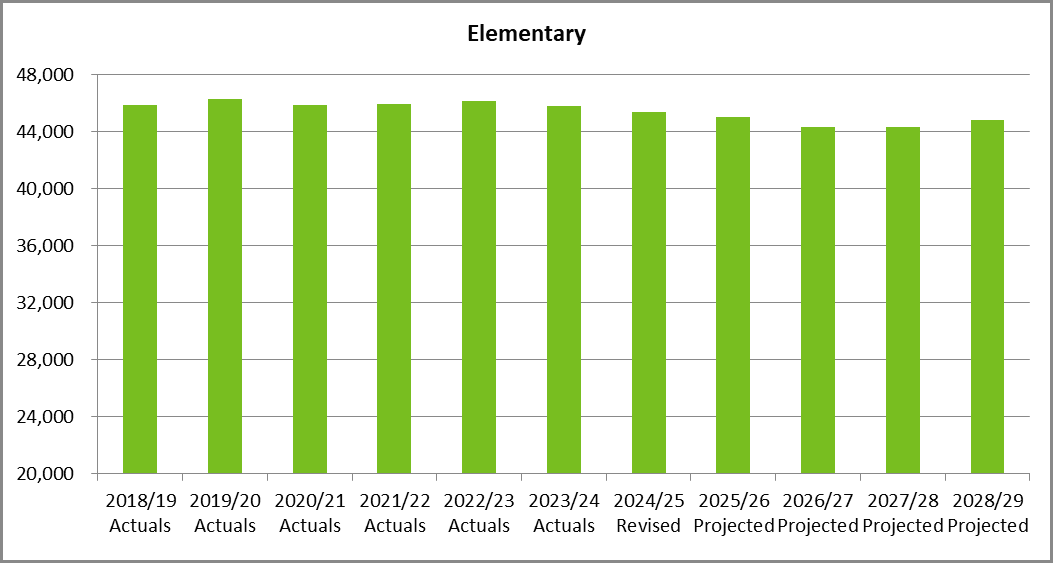
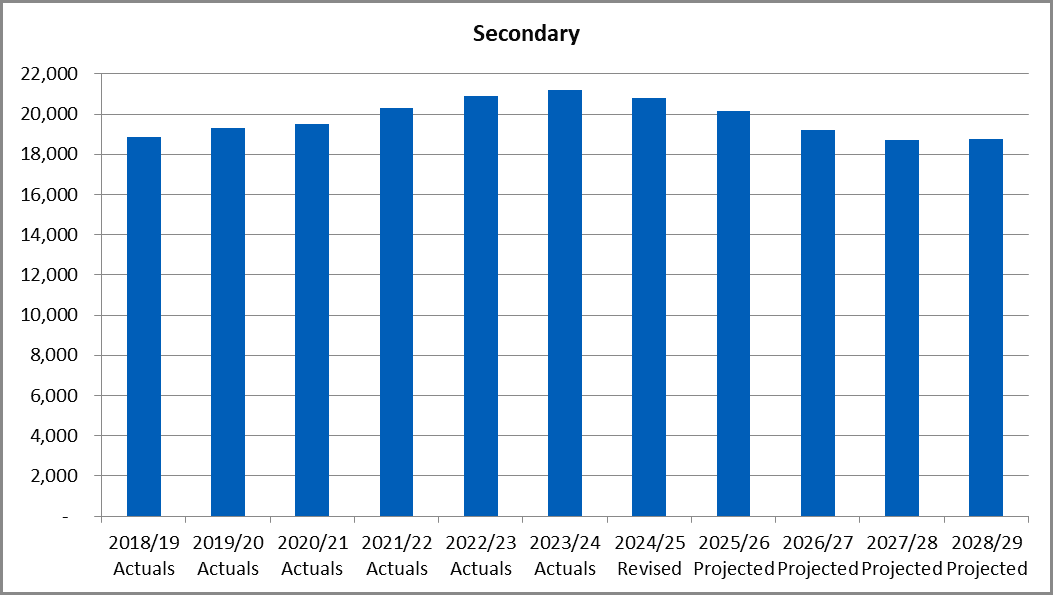
Over the past few years, the education sector has been presented with unprecedented challenges and funding pressures. It is also expected that elementary and secondary student enrolment will continue to decline over next two years due to aging neighbourhoods and slower growth in new development areas in Halton. With student enrolment as the main driver of funding for the school board, fewer students means less funding. 

The HDSB has budgeted for a $7.1 million deficit in the current year and is required by regulation to eliminate this deficit next school year (2026-2027). Balancing the budget next year will require eliminating the existing deficit and identifying additional reductions to address further enrolment decline. The 2026-2027 budget development process will be challenging and will require reductions across all areas of the school board, affecting staffing and non-staffing budgets. 

As the HDSB is planning to develop a balanced budget and eliminate the $7.1 million deficit, we need your input to help us understand what your areas of priority are and how we can minimize impact while achieving our financial goals.

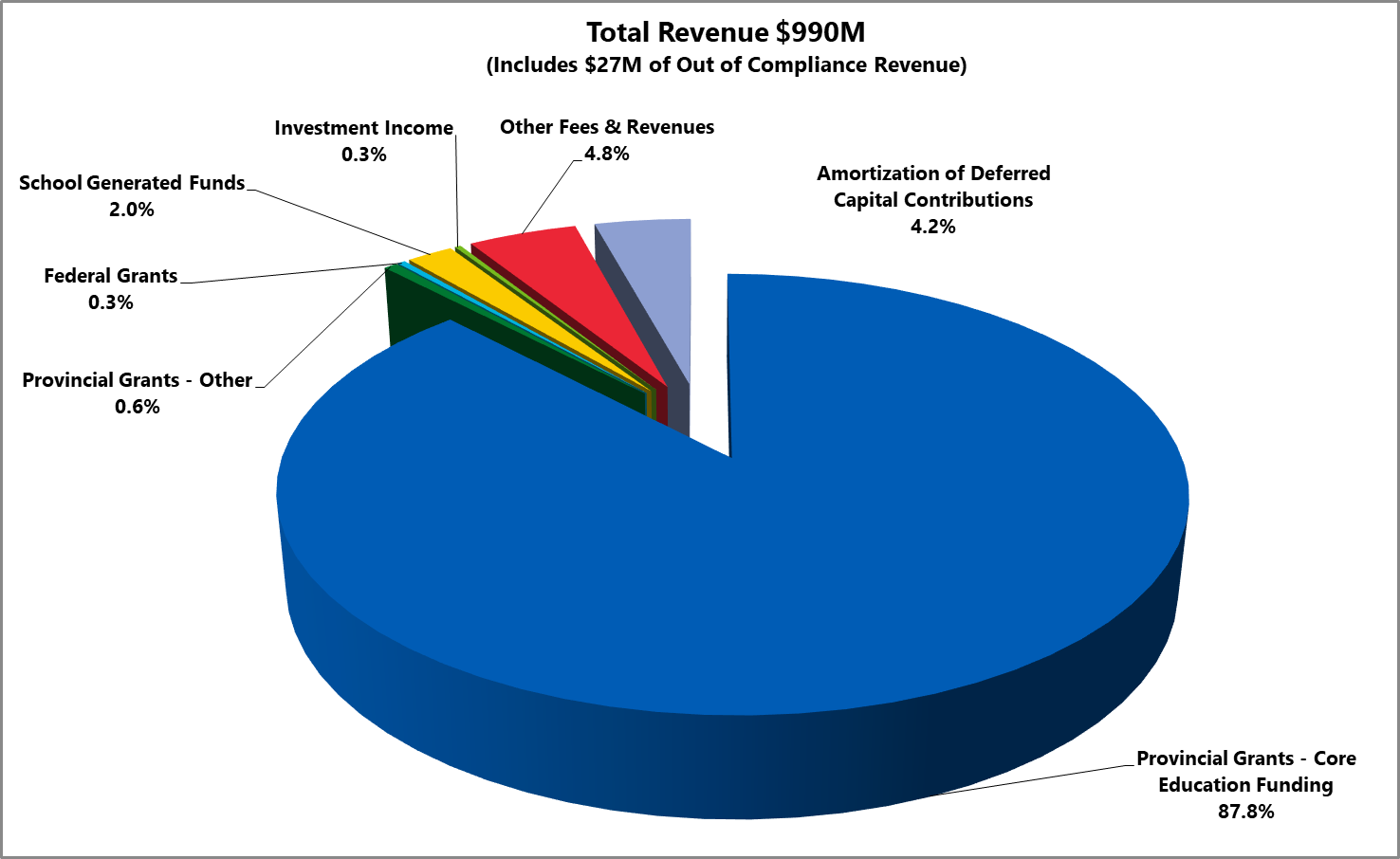
The HDSB receives the majority of its funding from the province through “Core Education Funding”. Most of this funding is restricted by mandated class sizes and staffing ratios, while other areas are designated by the Ministry to fund specific areas. The main areas where funding is restricted to specific use include: special education, student mental health and well-being, indigenous education, student transportation, temporary accommodations and capital funding. Learn more about how school boards receive funding by visiting the Ministry of Education webpage

Enrolment is the main driver of Core Education Funding. When enrolment declines, overall funding decreases across all allocations, even as the HDSB is opens new schools in areas of growth and faces increasing needs for special education services, student well-being and mental health supports and resources overall. Funding reductions due to declining enrolment affect not only classroom teachers, but the full range of supports students rely on. 

The HDSB directs 98% of its funding to activities that directly and indirectly support students. Budget decisions are guided by the HDSB’s strategic priorities in the 2024-2028 Multi-Year Plan. ​This means that the majority of funding is allocated towards resources that support student learning, engagement and achievement, while providing a welcoming and safe learning environment.

The 2026-2027 budget process and timelines are summarized below, and details will be added to the Budget and Financial Information webpage as information becomes available.

HDSB’s 2026-2027 Budget Process & Timelines

October - December 2025

  • Senior Staff Budget Planning Sessions

  • Budget Working Group Working Sessions

  • Budget Feedback Sessions with:

    • Halton Elementary Principals Association (HEPA)

    • Halton Secondary Principals Association (HSPA)

    • Halton Management Committee (HMC)

    • Special Education Advisory Committee (SEAC)

    • Halton Union Council (HUC)

    • Parent Involvement Committee (PIC)

    • Committee of the Whole

    • School Councils

January - February 2026

  • Stakeholder Consultation

  • Preliminary Budget Development

  • Internal budget holder planning meetings

  • Budget Development - Public Information Session (Monday, Jan. 19 at 7 p.m.)

  • Budget survey opens for feedback on Tuesday, Jan. 20, 2026

March - April 2026

  • Reviewing Stakeholder Feedback

  • Funding Release from Ministry of Education

  • Internal Budget Strategy Sessions

  • Budget Development

May - June 2026

  • Draft Budget to the Board of Trustees

  • Final Budget for Approval by the Board of Trustees​​

​Budget​ Consultation for 2026-2027 School Year​

The HDSB has a $7.1 million deficit in the current school year, which must be eliminated in the 2026-2027 school year. At the same time, the HDSB  has been experiencing declining student enrolment. Because enrolment is the main driver of funding, fewer students results in less funding across all allocations. Provincial regulations require the HDSB to balance the budget in the 2026-2027 school year. This means the HDSB must eliminate the existing $7.1 million deficit and identify additional reductions to address continued enrolment decline. As a result, the 2026-2027 budget development process will be challenging and will require reductions across all areas of the school board, affecting both staffing and non-staffing budgets. 

As the HDSB is planning to develop a balanced budget and eliminate this deficit, we need your input to help us understand what your areas of priority are and how we can minimize impact while achieving our financial goals.

Revenue $963.4 million - Expenses $970.5 million = Deficit $7.1 million deficit

All Ontario school boards receive most of their funding from the Ministry of Education through “Core Education Funding”. The majority of this funding is restricted, with specific rules for class sizes and staffing ratios. The remaining funding is allocated by the Ministry for specific purposes. This includes funding for areas such as special education, student mental health and well-being, Indigenous education, transportation, temporary accommodations and capital projects.

  • 92 elementary schools
  • 16 secondary schools
  • 5 continuing education centres
  • 45,066 elementary students
  • 20,149 secondary students
  • 6,664 full- time staff

The most significant underfunded areas compared to current needs include: 

  • Supply staffing costs (teachers, early childhood educators and educational assistants)

  • Special education 

  • Student mental health and well-being 

  • Workplace Safety and Insurance Board (WSIB) Claim costs

  • Learning resources, technology and IT infrastructure 

  • Temporary accommodations (portables/temporary learning spaces)

Over the last few years, the following changes to how education is funded have resulted in less revenue:

  • Funding for special education has been reallocated provincially, with HDSB losing approx. $20M

  • Top-up funding for school operations has been removed, resulting in $2.6M in lost funding for HDSB

  • Federally mandated enhancements to the Canadian Pension Plan (CPP)/Employment Insurance (EI), which are not funded provincially, have caused increased costs of $6M for HDSB

  • Inflation pressures and increased market costs are not reflected in the funding, with costs of contracted goods and services increased by 10-30%  

As a result of aging neighbourhoods combined with a slowed pace of growth in new development areas in Halton, student enrolment is forecasted to continue to decline next school year resulting in decreased funding. In previous years, the HDSB has been able to balance the budget through other revenues (e.g. facility rental fees, international student fees, investment income) however this is no longer sufficient.

2025-2026 Enrolment, Revenue and Expenditures

View current year enrolment, revenues and expenses which will form the basis of the 2026-2027 budget process. Details on the prior year's budget and financial statements can be found on the Budget and Financial Information webpage.

The Halton District School Board has experienced significant growth in enrolment before declining in the last few years. Enrolment is projected to decline over the next two years in both Elementary and Secondary panels before returning to a period of slow growth. Even with enrolment decline, the schools in south Milton and north Oakville are at, or over, capacity. To address this accommodation pressure, the Board is currently constructing a new secondary school in North Oakville, while also in the design stages for new elementary schools in both municipalities.

Enrolment is the main driver of Core Education funding, and as such, declining enrolment reduces the available funding across all funding allocations, even though the HDSB is opening new schools in areas of growth and is experiencing increasing needs for special education services, supports for students’ well-being and mental health and resources overall. Core Education funding also contains provisions for provincially negotiated compensation increases and some adjustments to address inflation. Other fees and revenues include tuition fees for international students, rental revenue and education development charges (land levies). Amortization of deferred capital contributions refers to capital revenue used to offset the non-cash expense of amortizing our tangible capital assets.

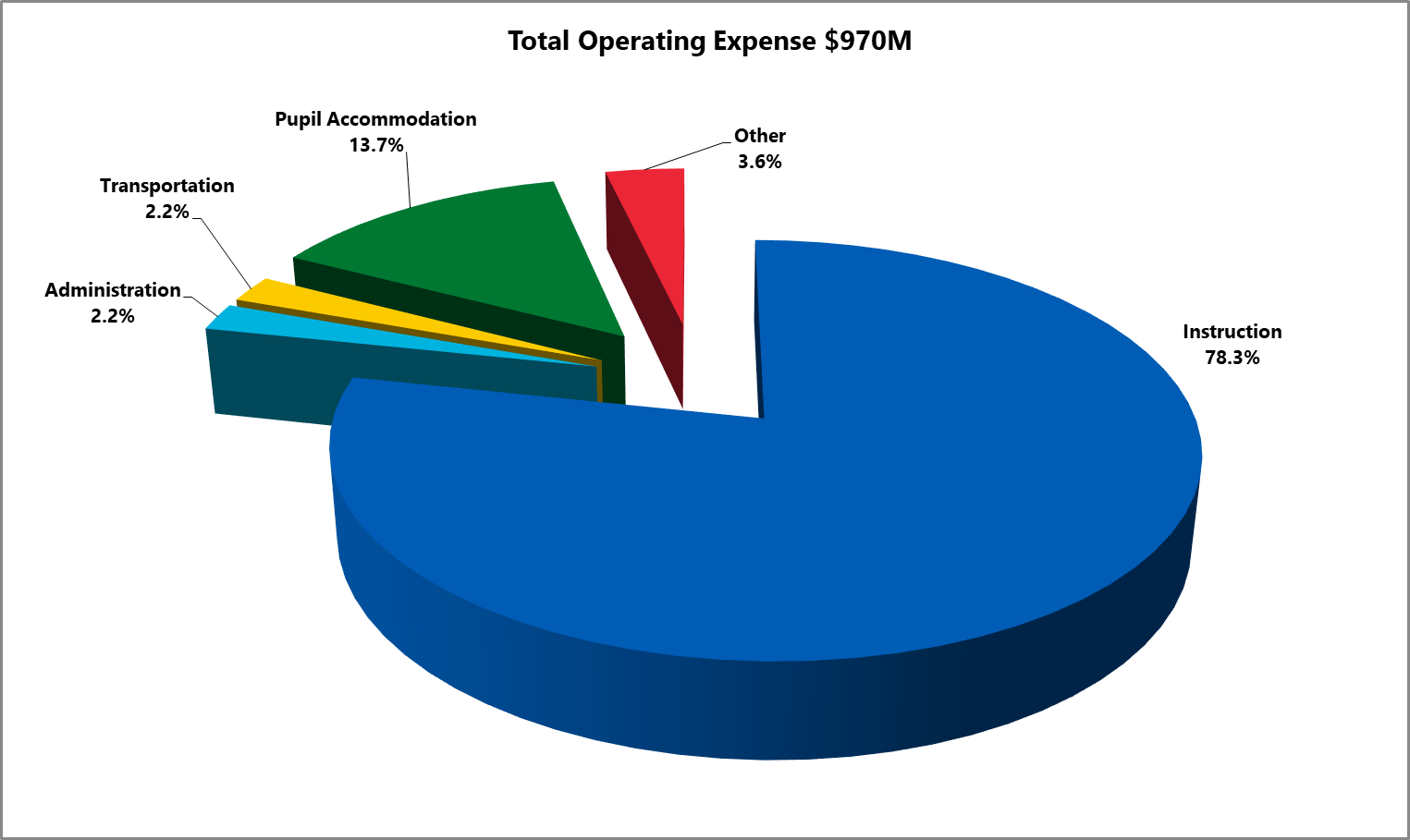
The following is a breakdown of operating expenses, by category:

Instruction - included in this category are: classroom teachers, occasional/supply teachers, educational assistants, early childhood educators, professionals, paraprofessionals and technicians, librarians, guidance staff, coordinators and consultants, principals and vice principals, department heads, school office staff, continuing education, summer school and international languages staff and programs, staff training, classroom technology, learning materials, classroom supplies and equipment.

Pupil Accommodations (School Operations & Maintenance)​ - includes expenditures for:

  • Operations and maintenance of schools;

  • School renovation projects;

  • Temporary student accommodations

  • Interest and financing of prior capital projects; and

  • Annual amortization of Tangible Capital Assets​.

Other - includes other non-operating expenditures, such as one-time Ministry funding for specific projects and School Generated Funds expenses.

Transportation - includes expenditures for pupil transportation to and ​from Halton District School Board schools as well as provincial schools. ​

Administration ​- includes expenditures for:

  • Board administration functions including finance, purchasing, planning, human resources, payroll, information technology, communications, research, and printing;

  • Director and supervisory officers;

  • Trustees; and

  • Utilities, minor repairs, caretaking and maintenance of administrative buildings.

Elementary Enrolment By Year

Secondary Enrolment By Year

Total Revenue

Total Operating Expenses