
From Iroquois Ridge HS to shaping the future of medicine: Dr. Zahir Kanjee on mentoring future doctors and advancing global health
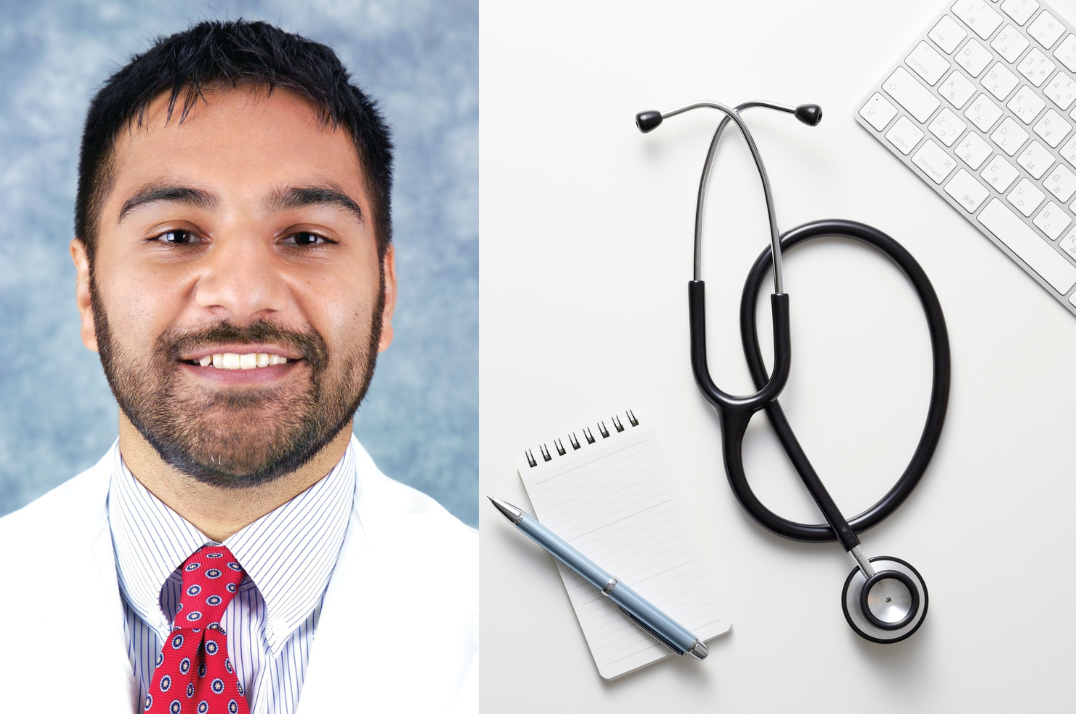
At Iroquois Ridge High School, Dr. Zahir Kanjee began developing the habits and interests that would eventually lead him to a rewarding career that combines his passions for medicine, education and global health.
As hospitalist and firm chief of the Robinson Firm at Beth Israel Deaconess Medical Center and an Assistant Professor of Medicine at Harvard Medical School, Dr. Kanjee is creating positive impact through patient care and education. “I feel very lucky to have a role where I can care for patients and also teach the next generation of doctors,” Dr. Kanjee says.
He supports medical students and residents as they develop their clinical expertise and professional judgment, which includes both “the medical side—diagnosing and treating illness—but also the human side: how to lead, communicate and navigate the many real challenges that come with a career in medicine.”
Dr. Kanjee says mentoring is one of the most meaningful aspects of his work.
“It’s inspiring and humbling to think that, by helping them become even a little better as physicians, I may also be helping the many patients they will care for over the course of their careers.”
After earning his undergraduate degree from Princeton University and his MD from Yale University School of Medicine, Dr. Kanjee completed residency at Brigham and Women's Hospital and later earned a Master of Public Health from the Harvard School of Public Health.
Armed with a wealth of expertise from the world’s leading medical institutions, Dr. Kanjee has set his sights on global health equity, driven by a sense of duty. “Working in global health is very important because it reflects a value that matters deeply to me: using the opportunities I’ve had to help others.”
That value has led Dr. Kanjee to seek out work where he can provide support to communities with limited resources. His current focus is teaching medical students from across Africa at the University of Global Health Equity.
Another important and emerging aspect of healthcare that Dr. Kanjee is contributing to is research on the role of artificial intelligence in healthcare.
“What excites me most is the potential to help both patients and healthcare workers. AI tools, including large language models, may be able to improve care in meaningful ways—but we’re still learning where they work well, where they don’t and how to use them responsibly. Being part of that discovery process is exhilarating.”
In addition to his clinical, research and teaching roles, Dr. Kanjee helps shape important conversations in medicine as Editor of the Annals of Internal Medicine Beyond the Guidelines series and the Journal of Hospital Medicine Point-Counterpoint series.
“These editorial roles are another rewarding part of my career. In both positions, I help lead journal series that focus on situations where there isn’t always one clear ‘right’ answer. Those are often the hardest and most important decisions doctors face. Working with other physician-authors, I help highlight that medicine is not always black and white, and that thoughtful decision-making—grounded in evidence, experience and patient values—can lead to better care for patients and communities.”
The opportunity allows Dr. Kanjee to learn from colleagues with expertise in different areas of medicine as well as explore a passion for writing that can be traced back to his time at Iroquois Ridge High School.
“My grade 11 English teacher, Kathryn Peterson, helped me discover how much I enjoy writing, which has become an important and rewarding part of my career.”
Dr. Kanjee credits many educators at Iroquois Ridge HS for influencing his path.
He shared a specific example in the form of a memorable exchange he had with former HDSB Director of Education Stuart Miller. At the time, Miller was Dr. Kanjee’s biology teacher and noticed him making, as Dr. Kanjee puts it, “some poor choices.” Miller had a characteristically candid response to his student skipping class (the word “bonehead” may have been used). “He gave me honest advice at a time when I needed to hear it. I’m very grateful for that.”
Dr. Kanjee also recalled support that “made a real difference” from history teacher Nick Brune, and career counselor Brent Montgomery: ”I feel very lucky to have gone to Iroquois Ridge and to have been surrounded by such dedicated teachers and mentors.”
Reflecting on what he wishes he had known about the medical field before embarking on his career, Dr. Kanjee offers this perspective:
“I wish I knew how many different ways there were to build a career in health. When people think of ‘healthcare,’ they often think of doctors or nurses. Those roles are incredibly important—and being a doctor is a big part of what I do and love—but there are many other ways to improve health and wellbeing.”
Dr. Kanjee attributes his success in the healthcare field to the foundation of strong habits he established early. “The biggest one was learning to work hard and always do my best. That mindset helped me more than almost anything else.”
Throughout university, medical school, training and his career, Dr. Kanjee focused his efforts on being disciplined, prepared and hardworking. “Those habits I built in high school have stayed with me and continue to help me every day.”
Dr. Kanjee shared an idea he came across in the book Ikigai: The Japanese Secret to a Long and Happy Life by Héctor García and Francesc Miralles, which he finds valuable to pass along to students who are thinking about their futures: “Look for something that a) you’re good at and enjoy, b) makes the world a better place and c) can support your life financially. People tend to focus on the last one, but I think the first two are the most important.”
Ultimately, Dr. Kanjee believes the secret to a fulfilling career lies in looking beyond the bottom line. “If you can find a job that gives you purpose and makes you genuinely happy and inspired to go to work each day, that’s worth much more than money. Find and explore your passions and channel that in a way that helps others.”


