
Rooted in Partnership: Alexander’s Public School Plants 250 Trees to Help Bring Back the Salmon
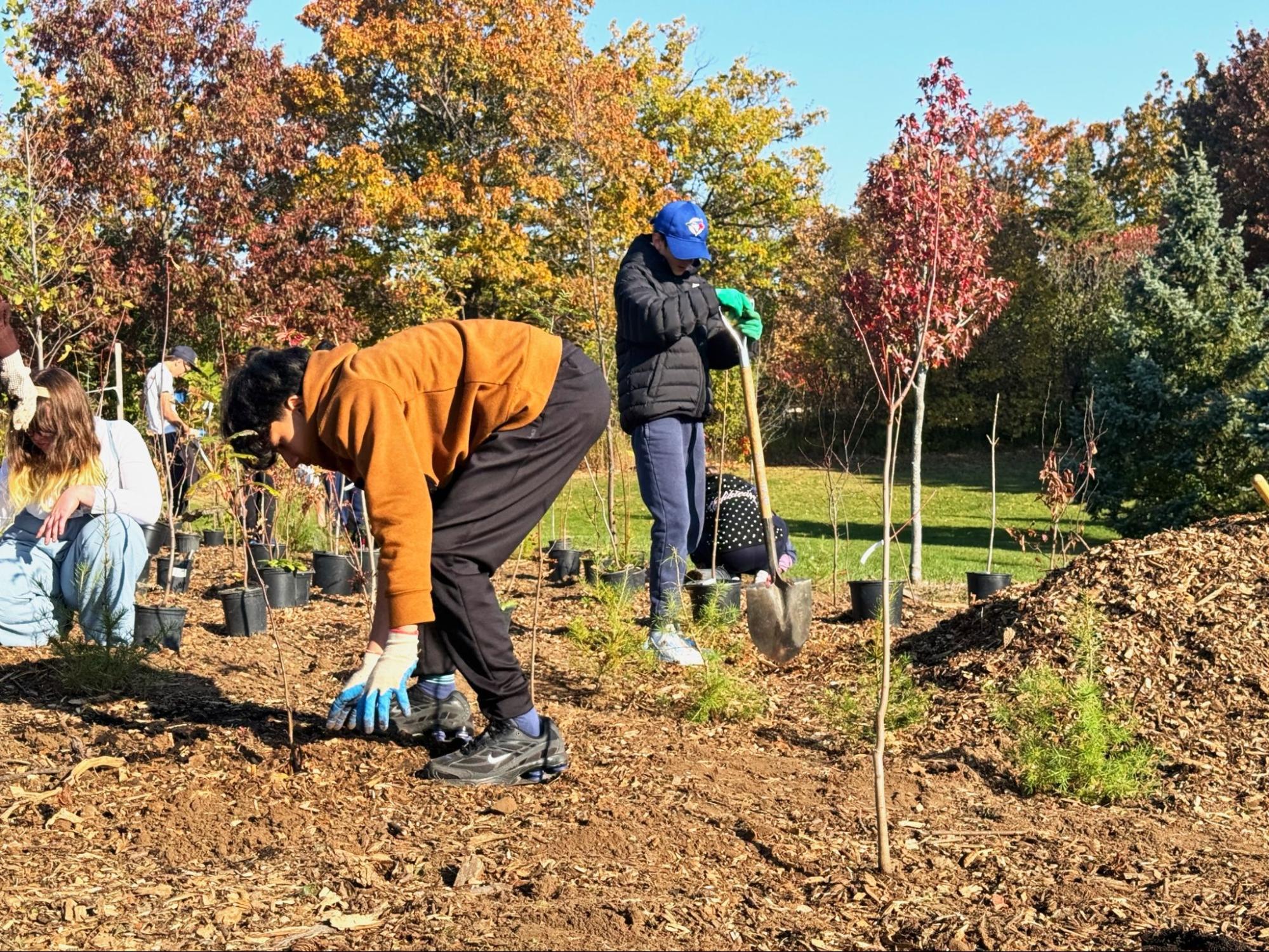
Students plant trees in Orchard Park, next to Alexander’s Public School.
More than 200 students at Alexander’s Public School in Burlington helped plant 250 trees in Orchard Park, right next to their school, on Oct. 22 as part of a community partnership to restore the local ecosystem and help bring Atlantic salmon back to Lake Ontario.
Held during Take Me Outside Week, the tree planting day brought together the City of Burlington, the Ontario Federation of Anglers and Hunters (OFAH) and the Environmental Leadership Learning Centre at Alexander’s. The new trees add to the 250 planted last year as part of an annual tradition that directly supports Burlington’s goal of increasing its tree canopy cover.
The event is connected to OFAH’s Bring Back the Salmon Classroom Hatchery Program. Before heading outside to plant, students participated in a presentation from OFAH on the importance of healthy ecosystems in supporting salmon populations, hosted in the Environmental Leadership Learning Centre.
“Deforestation was a primary driver in the extirpation of Lake Ontario’s Atlantic salmon, making reforestation essential to their recovery,” said Ben Teskey, Atlantic Salmon Restoration Program Co-ordinator with OFAH. “Engaging students in tree planting along Bronte Creek, right next to their school, improves the creek’s water temperature, quality, flow and food web, while teaching young people the value of ecosystem health. This project wasn’t just about planting trees; it was about planting the seed of environmental stewardship.”
“This effort demonstrated the true power of community collaboration through a partnership between the Ontario Federation of Anglers and Hunters, the City of Burlington, Nature’s NEAR and Alexander’s Public School, with generous financial support from Ontario Power Generation and the TD Friends of the Environment Foundation,” he added.
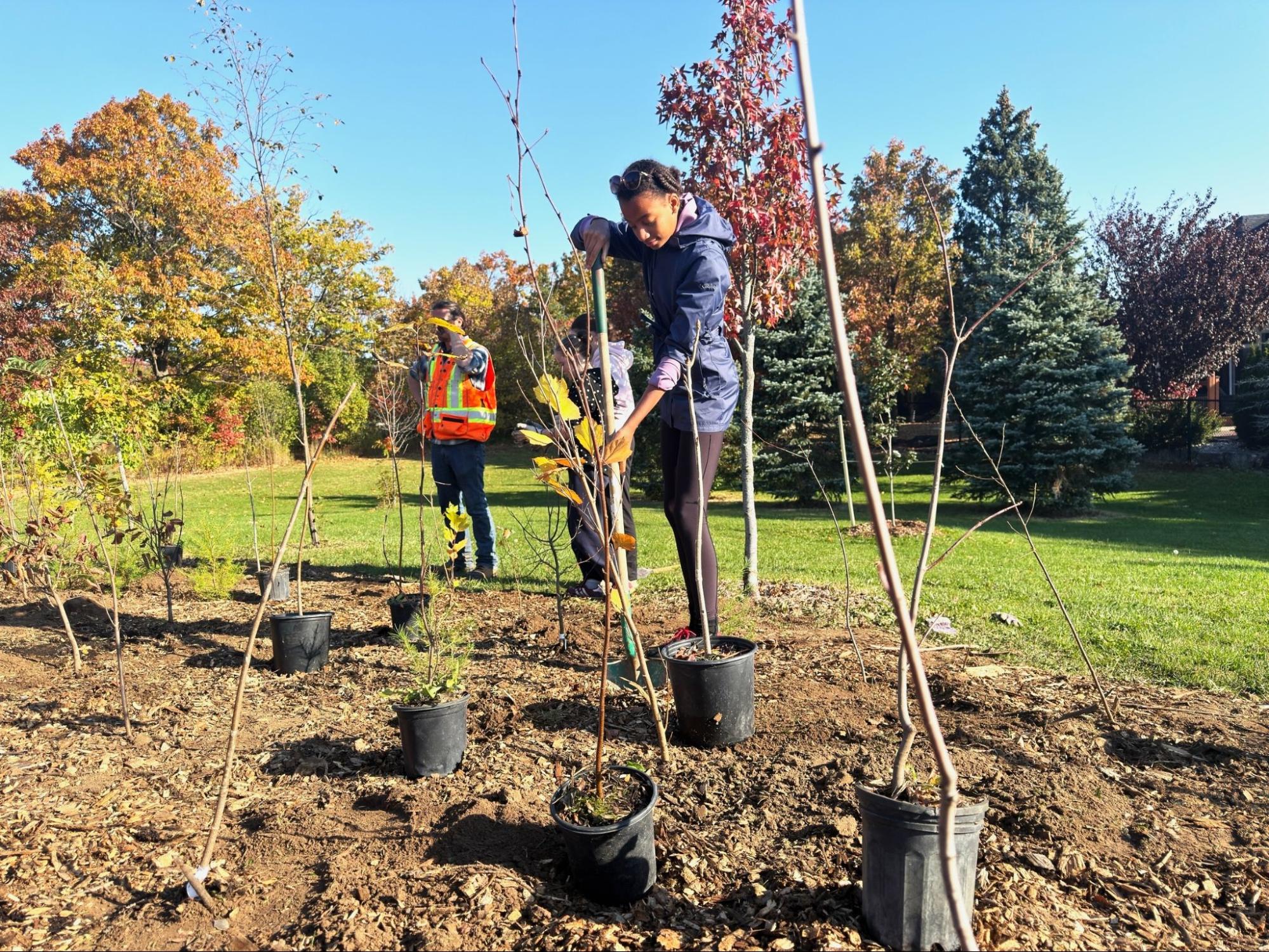
A student helps plant one of the 250 new trees.
Grade 7 and 8 students also took on leadership roles, running a series of environmental activities for younger students. Hands-on science stations included birds and binoculars, the life cycle of an oak tree and the life cycle of cicadas, along with a recounting of “Seeds of Change,” the story of environmental activist Wangari Maathai. The older students also designed ecosystem scavenger hunts for the tree planting site and nearby Bronte Creek, where many Alexander’s students had recently watched the salmon run.
“Older students mentored younger ones through scientific inquiry and the accompanying wellness benefits of nurturing life,” said Mirayam Nowak, an educator at Alexander’s. “It was inspiring to get our hands in the dirt, spend the day outdoors, engage with heirloom seeds that tell stories, identify birds from feathers and connect how both people and animals benefit from trees, as well as how trees support local ecosystems and food sovereignty.”
“It felt great to lead and help out in this eco-friendly activity,” said Malik, a Grade 7 student.
“The addition of having our Grade 7 and 8 students lead younger classes through hands-on activities was truly inspiring,” said the school’s administration team. “Through leadership, teamwork and mentorship, they planted the seeds of stewardship and showed our school community what it means to take meaningful local action.”
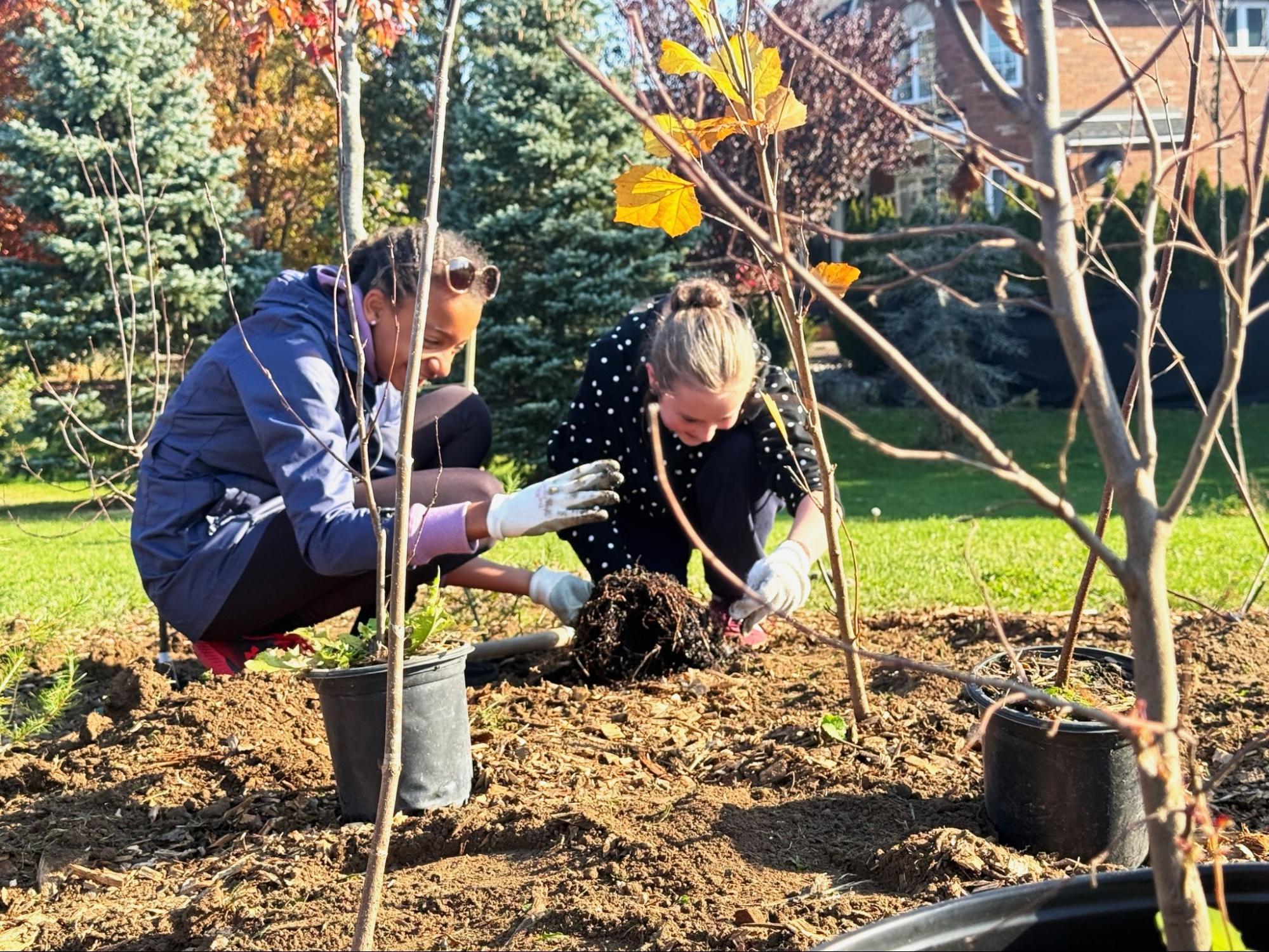
Students prepare a young tree for planting.
For many students, the day was a chance to give back. “I really enjoyed giving back to the planet that provided me with food by planting its trees,” said Mustafa, a Grade 7 student. “I also loved teaching the kids the importance of nature and how you need to give back to it.”
“My favourite thing would have to be the community and seeing everyone outside, enjoying nature,” said Scarlett, also in Grade 7. “It was a very fun, interactive experience and a nice change to see kids and adults alike outside rebuilding wildlife while staying off of devices.”
Others made the connection to the salmon. “On tree planting day, I enjoyed being outside and doing something good for the environment the most,” said Cole, a Grade 8 student. “It made me feel good about myself that I helped out the earth and also learned about how planting trees helps salmon.”
While students worked in the park, more than 100 educators took part in a day of outdoor experiential education professional development, held entirely outside. Morning sessions facilitated by Learning for a Sustainable Future focused on connecting math, literacy, art and music curriculum to the outdoors. In the afternoon, Elementary School Programs and Environmental Leadership offered cross-departmental sessions that extended and deepened the learning.
Elementary School Programs and the Environmental Sustainability team initiated collaboration with the Indigenous Rights and Education Department to establish an Indigenous Rights-based and reconciliation approach to the learning.
Throughout the day, educators saw whole-school environmental leadership in action, to inspire them to build capacity back at their own schools.
“We hope educators saw how partnering with community organizations helps students connect curriculum learning directly to real-world action that positively impacts local ecosystems,” said Sarah Patterson and Benjamin Harrison of the HDSB’s Elementary School Programs team.
In working with the Indigenous Rights and Education Department, educators are learning that the core message moves beyond seeing nature as an outdoor classroom or recreational resource to recognizing Indigenous sovereignty, Indigenous Science, relational accountability and listening to and respecting the environment as the first teacher.
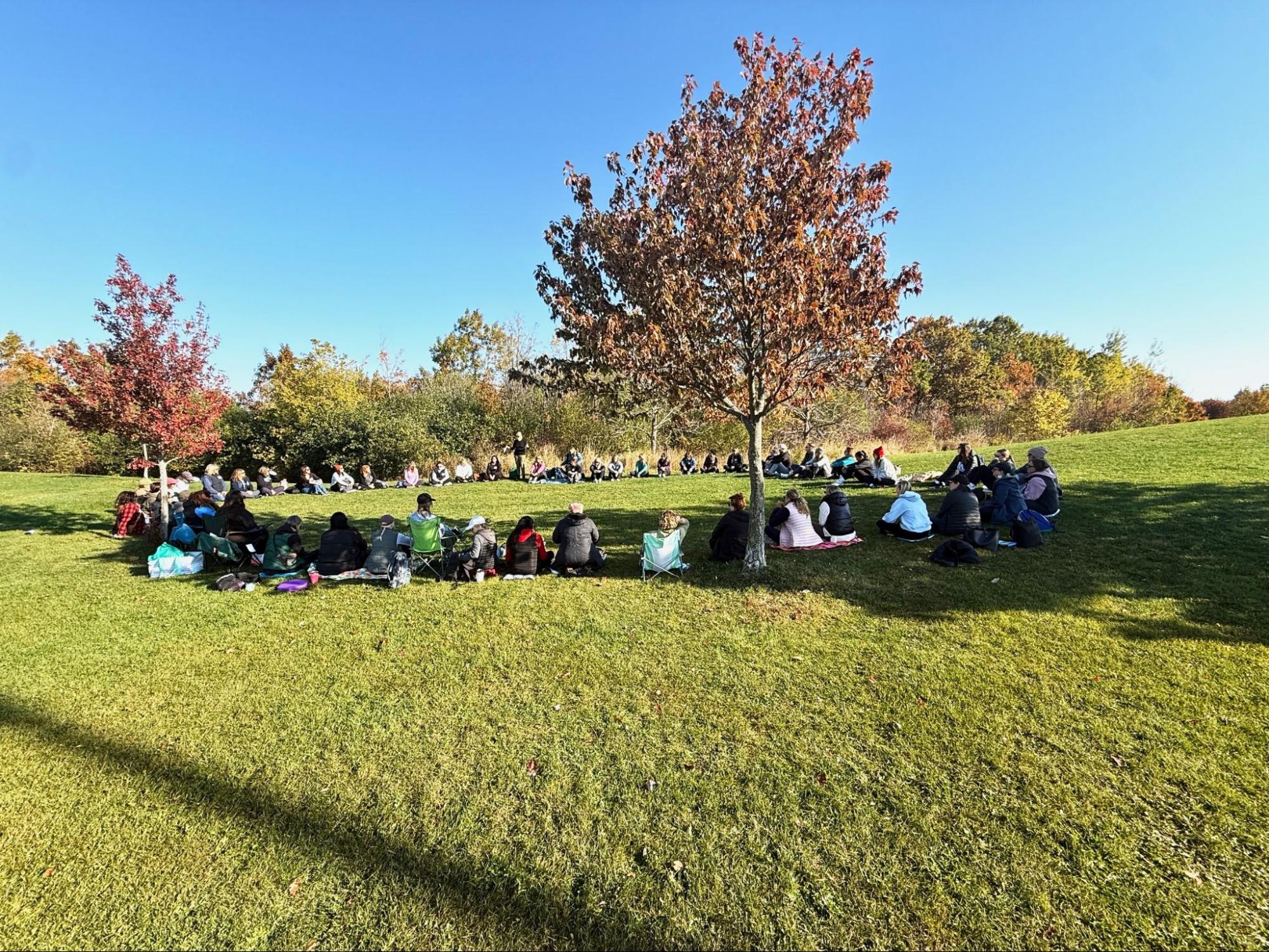
Educators gather outdoors for a professional development session.
The Indigenous Rights and Education Department recognizes that taking an Indigenous Rights-based and reconciliation approach to the learning must be prioritized to guide system planning and learning sessions. As we advance our environmental sustainability goals, we remain committed to centring these foundations in future initiatives.
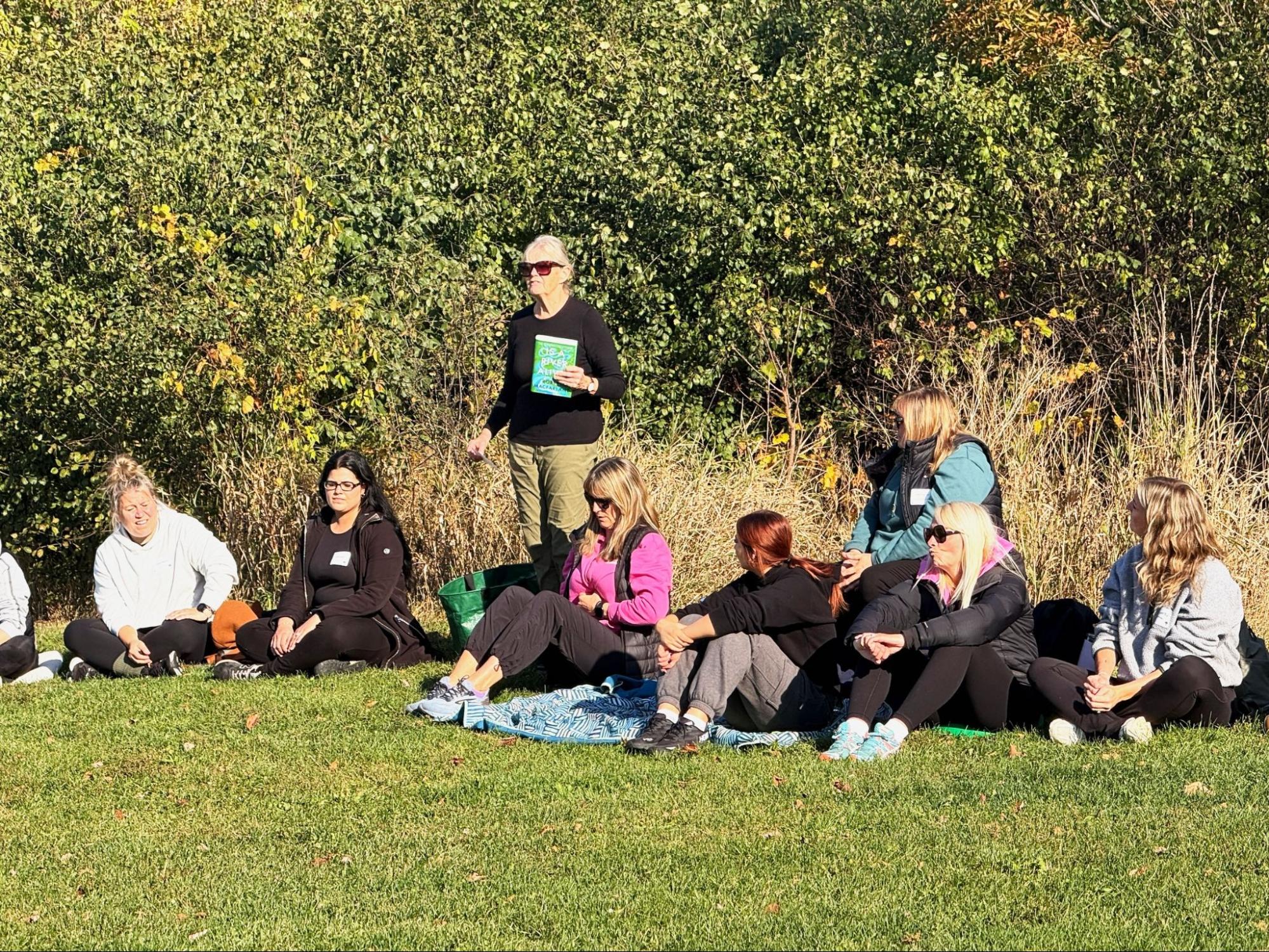
Educators take part in a morning session on bringing curriculum learning outdoors.
Intermediate students have already begun preparing the ground for another tree planting next year, continuing an annual tradition that has become a highlight for the whole school. Students proudly share their involvement with parents/guardians and community members, showing how local action right in their own backyard can help advance the United Nations Sustainable Development Goals.


